Shouting at the Machine

How do you make a film? How do you storyboard it? How on earth do you edit it? Maybe I should’ve asked these questions a couple of years ago? If I were asked them now, I’d have loads of sage advice to share. I would sit there in front of lots of keen young filmmakers, lecturing them as if I knew what the fuck I was talking about. Truth is, when I started this project, I wasn’t so sure. But last week felt like nothing more than “worrying away at it”. That said, every time I go through this process, I stumble across another stage of filmmaking that professionals would no doubt recognise instantly, but never bother to mention. There’s a whole shadow curriculum to this business. I’m half-tempted to write a book about it when I’m done.

In the meantime, last week was spent shuffling bits about – tightening cuts, trimming excess and nudging sequences into place. The main thrust has been improving the narrative structure. It all felt a bit haphazard to begin with, but somehow, perhaps subconsciously, I’ve managed to trim the fat, sort the sequencing and generally polish it up. I’m calling that progress.

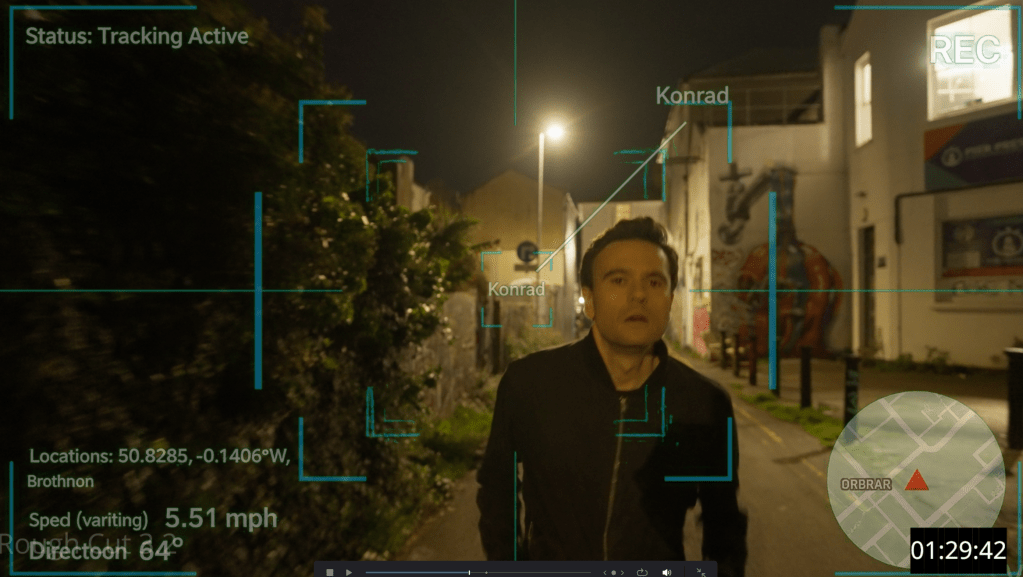
There’s a well-worn criticism of IT technicians who move into management that they’re too ready to retreat into what they’re comfortable with and avoid what they’re not. So, instead of managing people, they end up endlessly tweaking spreadsheets. I’m clearly guilty of that and towards the end of last week, I disappeared down a rabbit hole with Davinci Resolve’s “Fusion” tool – an image manipulation feature that is both extraordinarily powerful and maddeningly obscure, with zillions of controls.

AI came to the rescue unexpectedly – albeit in a slightly unreliable way. I’ve been leaning on Google Gemini for guidance with Fusion, but because there are multiple versions of Resolve, it often gets things completely wrong. Ah, but the big advantage of AI over books is that you can argue with it. You can challenge it, point out its mistakes and get it to justify itself. You can even do that in the sort of language you might use with a particularly stupid assistant. In fact, the whole exchange has ended up rather neatly reflecting the theme of the film itself: “You absolute wanker! I told you – there is no ‘Invert’ button on that page! I’ve asked you three times and every time you give me something different! I’ll ask one more time: Where is the fucking Invert button?” The beauty of machines, of course, is that they don’t take offence. They just sit there, keeping their cool, while I lose my rag – and eventually, through sheer persistence, I figure out how the software actually works.

Meanwhile, our music producer, Carrie Higgs, is still somewhat in limbo as I haven’t yet delivered picture-locked media. That hasn’t stopped her progressing though, and she’s already sent through draft compositions, which I’ve dropped into the edit to get a feel for tone and atmosphere. We also agreed on the closing sequence music, and it’s all sounding very promising. We’re looking to bring in a group of local singers, so if you’re a choral singer anywhere near Brighton and happen to be reading this, then please get in touch.

So, we have narrative improvements, a few effects, some music and the odd pickup shot. It’s coming together and I’m nearly ready for another test screening. I’d had my sights set on the Brighton Rocks Film Festival but entries closed in April. I feel it’s better to get the film right than rush it … and I really think it’s getting there.

Be Bold

Two weeks ago, I wrote about a rough-cut screening and the feedback that came out of it. I’d been toying with the idea of handing the edit over to a professional editor, thinking their experience – and a fresh pair of eyes – might bring it to life. Unfortunately, the guy I had in mind has too much work of his own, so it was down to me and I felt a bit swamped.

The general consensus from the screening was that, once past the first hour, the audience was engaged, but it took far too long to get going, and there were too many threads in play.

I tinkered around here and there before hitting on the idea of grouping scenes by location, pulling similar settings together. I ran this past Google Gemini and, for the first time, it flatly rejected my idea, suggesting I do virtually the opposite – organise the film not by location but by emotional charge. Of course.

Of course, of course!

I saved the old version and resolved to take a far more ruthless approach with the new cut. I reworked the first half of the film, ignoring continuity issues. (I’m learning that these are often not as critical as one imagines). I set about trimming back, if not mercilessly, then certainly more assertively. I think in the past I’d erred on the side of caution; this time, if I feel something should go, I’ll cut and be damned.

Editing can be a fairly lonely process, and after a while, I’d had enough of it. But by the middle of last week, I got my second wind. I’d wanted a fresh eye, and in a way I’ve managed to give myself one. I began to see that my earlier cuts had been way too slow. Too methodical. Too unthinking. By then, I was spotting it in nearly every scene. There was too much redundant dialogue left in. One scene in particular is meant to jolt the audience, but was flagged during the test screening as needing more punch. I went back and tightened it considerably, cutting it from nearly 3 minutes to around 1 minute 40.

I’d also been wrestling with continuity in a couple of scenes. Another conversation with Gemini re-framed that entirely. It suggested treating it not as a problem but an opportunity to introduce some disruption. With that in mind, I hacked away at the scene, then brought in some takes I’d previously thought unusable. By the end of the week I’d reduced the runtime from 2 hours 7 minutes to 1 hour 53.

There is still a chance a couple more scenes might have to go, though I hope not. More work is needed, but I feel I’m making progress.

Then on Saturday, I turned my attention to prepping my spare room to double as a call centre for a pick up shot. “Impossible!” you might say? It turns out it’s not. I picked up a useful lesson from my DOP: it doesn’t matter what the whole room looks like, only what you can see through the lens. So, with an 80mm portrait lens and a shallow depth of field, the background falls out of focus. All I needed then was to get the right colours and shapes in place. Fingers crossed, I think I’ve done it.

Tasks for next week: schedule the pick-up shots and carry on with this more ruthless edit. I’m still not entirely certain that I’m fixing all the issues raised after the test screening, and I still may have to hand over to a professional editor for the final pass. But, for now, I’ll see how far I can get with this version myself.

Parking

More editing last week. On Monday, I sat and watched the second rough cut all the way through on the TV. I wanted to see what needed work. The rest of the week was spent tightening cuts and cleaning up audio, and by Friday, I was about 35% through the third draft. By the end of this, I am hoping the film will be technically sound. After that, I’ll need to turn my attention more fully to the narrative flow, which may mean cutting or moving scenes, or possibly shooting something new to bridge any gaps.

I’ve also been speaking with an intern about social media promotion, and we’re beginning to sketch out how that might look. I’m meeting a musician next week to talk about the score.

Automatic is about bureaucracy, and I find myself increasingly sensitive to episodes of dehumanisation. One occurred on Friday in the form of an automatically generated letter from a parking company demanding £100 for overstaying by two minutes in a car park in Chichester during the recent film event.

It’s worth noting that the parking company has access to my GDPR-protected personal information at DVLA – a privilege granted by the British government so that they can pursue people who break their rules. Fair enough, perhaps, in an age where efficiency is worshipped as some kind of God. But in return for that privilege, we might expect a measure of proportionality and respect. The parking fee was paid via an app; it would have been to charge me for the extra two minutes rather than demand a bullying, automated demand for £100.

In any case, I drafted a letter outlining their failings: poor signage, no mobile signal, limited payment options, a lack of meaningful support. Out of curiosity, I uploaded my letter to Google’s Gemini AI. It informed me that this particular car park is apparently notorious, then rewrote my letter removing the waffle and inserting reference to the relevant regulations where the operators appear to have fallen short.

This is interesting. One of my long-standing grievances about modern life is the way that a machine can, out of the blue, become judge, jury and executioner. Many people are not in a position to argue back coherently, and even if they are, busy lives make it tempting simply to pay up and move on.

Now, freely available AI puts the boot on the other foot. We can answer their computer-generated bullshit with computer-generated letters of our own that include all relevant regulations. A weird world where two computer systems fight over the fate of humanity.

Wrap Party

We had the Automatic wrap party last Saturday night at a pub in Brighton. Around 30 people turned up, including cast, crew and others who’d helped out on the film. It was a great chance to catch up after filming and talk about what we’d all been up to. Oddly, none of us seems to have taken any photos, which I’m choosing to attribute to everyone having such a good time that pictures simply didn’t occur to us.

Of course, having the wrap party doesn’t mean we’re all done and dusted. I’ve been working on the second draft of Automatic, choosing better shots and takes and tightening up the cuts. I’ve also allocated specific audio tracks for each actor, selecting the best audio and placing it on the correct track. I’m slightly torn between the technical side, trying to get everything right, and the more intuitive process of choosing which shot works best. So, my approach has been to work on the scene, improve it, but not perfect it, then move on to another. I’ve listed all the scenes in a spreadsheet along with the duration of the current version, which lets me calculate roughly how far through the edit I am. For this draft, I’m about 50% of the way through.

There are a couple of scenes which are fairly intense and I haven’t yet tackled those properly for draft 2. With the help of ChatGPT, I’m learning more about editing as I go, and my thinking is that what I learn working on the simpler scenes will benefit the more complex ones later on. I’m realising that there is much more to this editing lark than meets the eye.

For example, a J-cut is where the audio from the next scene starts before the video cuts to it, and an L-cut is where the audio from the current scene continues after the video has cut to the next. I have used these techniques to some extent and gave myself a pat on the head for being so creative. However, last week, while editing, I asked ChatGPT about this technique, and I’ve now discovered that it’s actually fairly standard practice, and that J-cuts in particular feel more natural and draw the viewer in. Suddenly, it dawned on me that this is probably the norm for most edits, and that cutting of audio and video at exactly the same point might actually seem quite clunky.

It did cross my mind to hire a professional editor who would already know all this stuff. But then I might also have hired a professional producer and a professional director. In fact, I could simply have bought some shares in Warner Brothers and gone down the pub. But I wanted to direct, and I wanted to edit – so here I am.

Last week, while editing, I realised I needed phone ringtones. I can’t use standard ones because they’re covered by copyright. I hunted around online and found a few possibilities, but I really need to stay focused on editing. So I put a call out on Facebook, and two friends came back to me. One guy I’ve known for years is a whiz with synthesisers, and he’s generated some ominous and irritating buzzing noises. Another is the son of an old sailing friend who’s just completed a degree in Film, TV and Digital Production at Royal Holloway University. He’s going to get me some tones for phones and computers.

There is also some specific music I’d love to use in the film. Although I doubted I’d be able to afford the copyright fees, I reasoned nothing ventured, nothing gained, so I contacted one of the bands and was pleasantly surprised when they replied, saying they are considering the idea. I’ve also contacted a local musician about other music, and we’re currently in discussion. I still need to finalise the voice-over for a presentation which appears in the film. I’ve got a couple of options, both of which are promising, but I need to get that scene edited so I can try out the audio properly.

As mentioned in a separate post, Chichester Film Makers have asked me to talk about Automatic and screen a short excerpt at their Winter Event on Saturday, 31st January 2026. Today, I’ve been working on a teaser trailer for that.

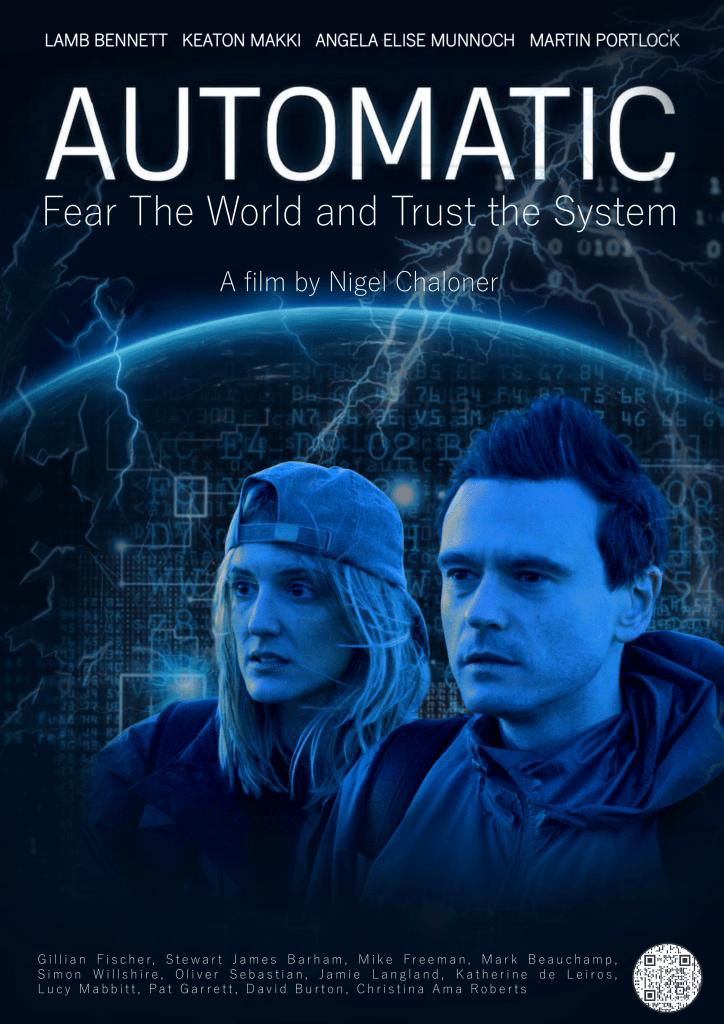
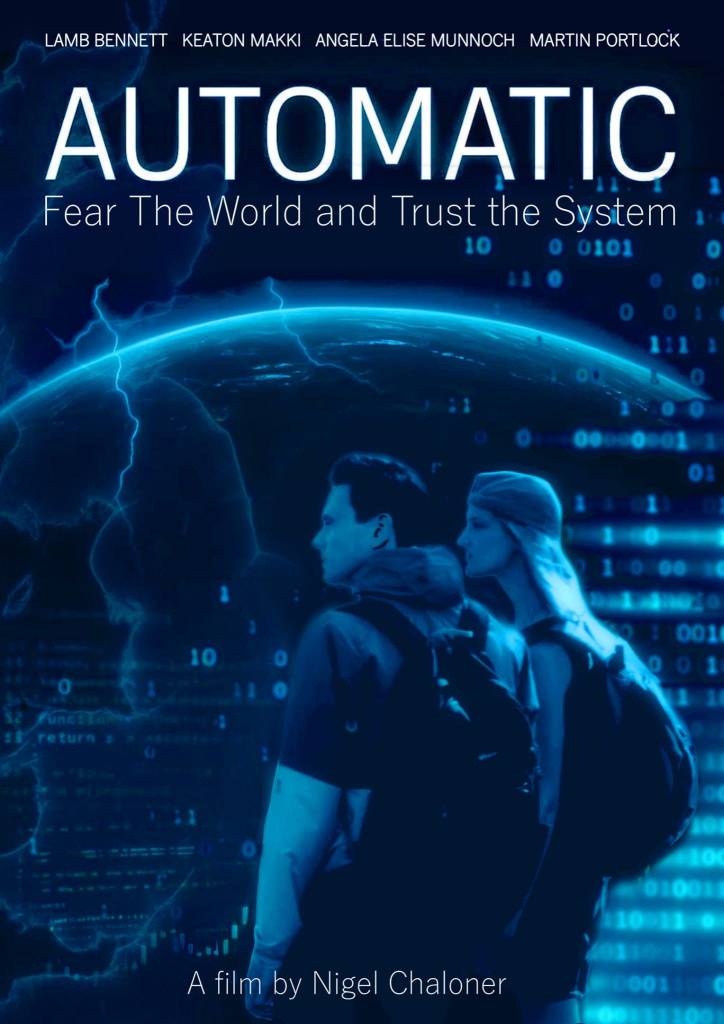
Tom and Julie are back from gallivanting around the Far East. Tom has completed a new version of the poster, and Julie managed to get my Chichester talk listed on the Sussex World website. Many thanks to both of them.

Last but not least, I’ve agreed an internship with a student at Valencia College in Orlando, Florida. He’ll be starting very soon and will be working on social media promotion.

At the moment, I’m aiming to get Automatic into the Brighton Rocks Film Festival by the closing date of 21st April 2026.

Shirts, Scheduling (AGAIN!!!) and a Drone

Last week, I tried—and failed—to schedule the remaining shoot days. We’ve got one day for some street scenes, two days in a friend’s flat and one very quick scene with the truck. Scheduling might sound straightforward, but everyone communicates via different channels. Most people use WhatsApp and email, but I’m also contending with telephone calls, texts and yes, even snail mail. Pick the wrong channel and all you get is silence. I thought I’d sorted the truck scene, had all four actors on board, but alas, the truck wasn’t available. Hey ho.

On a more positive note, I’ve started being more systematic about prepping media. I’ve set up a spreadsheet with columns for audio received, video received, media filed, media synced and so on. Going through it made me realise I’m missing the video from the petrol station shoot, as well as audio for several days. A few panicked calls to the DOP and sound team quickly reassured me—they do have the media; I just need to collect it.

In other good news, a friend spotted an article about Automatic in the local paper, The Argus. Huge thanks to Julie Russell, who’s been doing PR for Automatic and sent a press release to The Argus some time ago.

I also finished the submission for the film on the Internet Movie Database (IMDb) and was delighted to see the entry go live within a day.

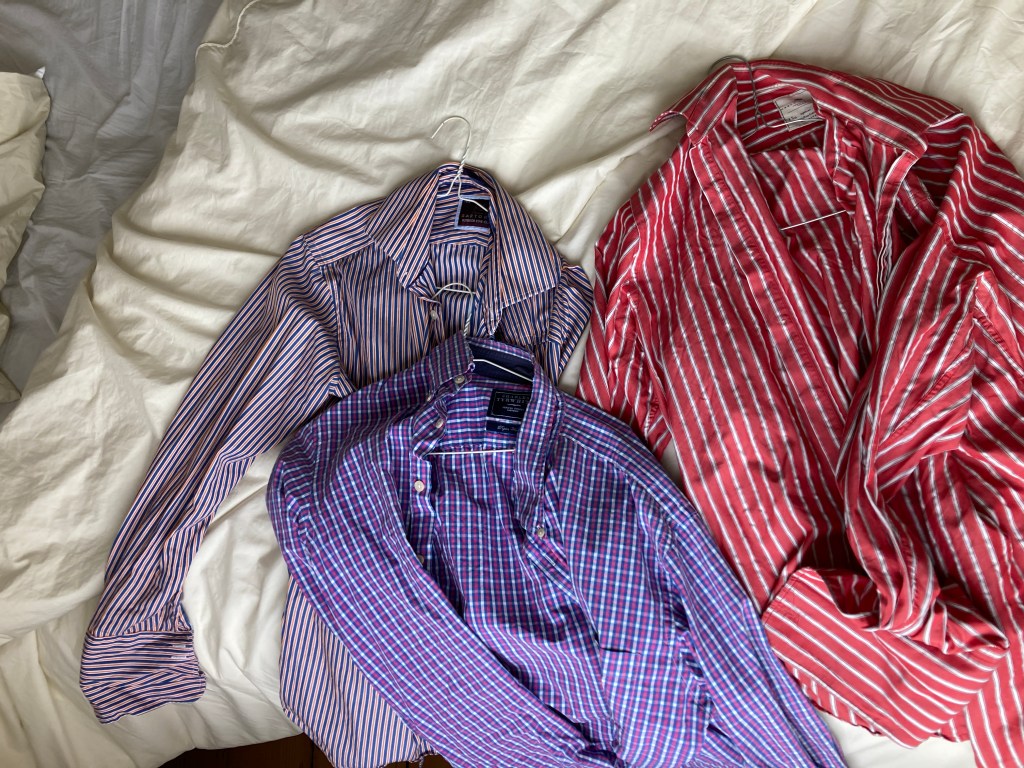
We did manage a very short shoot last week. I’d put out an advert for a flat in a block for a quick scene, and luckily, a friend replied. I scheduled it for Saturday. I also needed to capture one quick shot we’d missed on the original shoot day in my flat. So Saturday found me back in my spare room, repositioning lights, furniture and a couple of shirts to recreate the exact look of the earlier shoot. Stuart and I polished that shot off pretty quickly, then we picked up Alistair and headed over to Newhaven for another short scene, including a drone shot that Alistair handled admirably despite a stiff breeze.

This coming week, I’ll continue prepping media and getting the remaining shoot days scheduled (hopefully!).

Distracted by Editing

Last week was relatively quiet. I admit it – after wrapping up those three days of filming, I took my foot off the pedal and started diving into the editing. Modern editing software is very powerful, but I’m realising that I understand only a fraction of what it can do.

We have been trying to use one lav mic per actor plus a boom mic, which results in multiple audio clips for every take. Syncing all of this is a task in itself. Ideally, Resolve would handle it automatically. It does have automated syncing for multiple takes and clips, but it seems to only sync one audio clip to one video clip. Last week, I started auto-syncing all audio clips for a single take with their corresponding video clip. That seemed to work, though it ends up pulling all the audio into the original video clip.

I could go on, but I’ve probably lost most readers by now, except for the real nerds. You get the idea: editing is complicated. I managed to get one scene 90% assembled and I have to say that I like it.

On a more creative note, Angela and I have been thinking about ways to break up the main scenes a bit, so we’ve been sketching out what we’re calling “transitions”.

Meanwhile, Julie got the press releases out, and we’ve already had some feedback. Sussex World has run an article, and Brighton and Hove Magazine are interested in a Q&A.

We’ve got another shoot coming up in the offices this Saturday. Many, many thanks to Mark Tournoff and Gosia Stewart of EC Brighton, who have kindly lent us their office space for filming.

Part of the reason last week felt quiet is, of course, that I started editing. It’s one of those tasks where you can easily slip into a steady state of flow, and hours just slip away. Some people edit as they go, but I’m finding that it distracts me from the remaining production tasks – so, my next priority has to be completing the filming.

Paper-Based Project Management

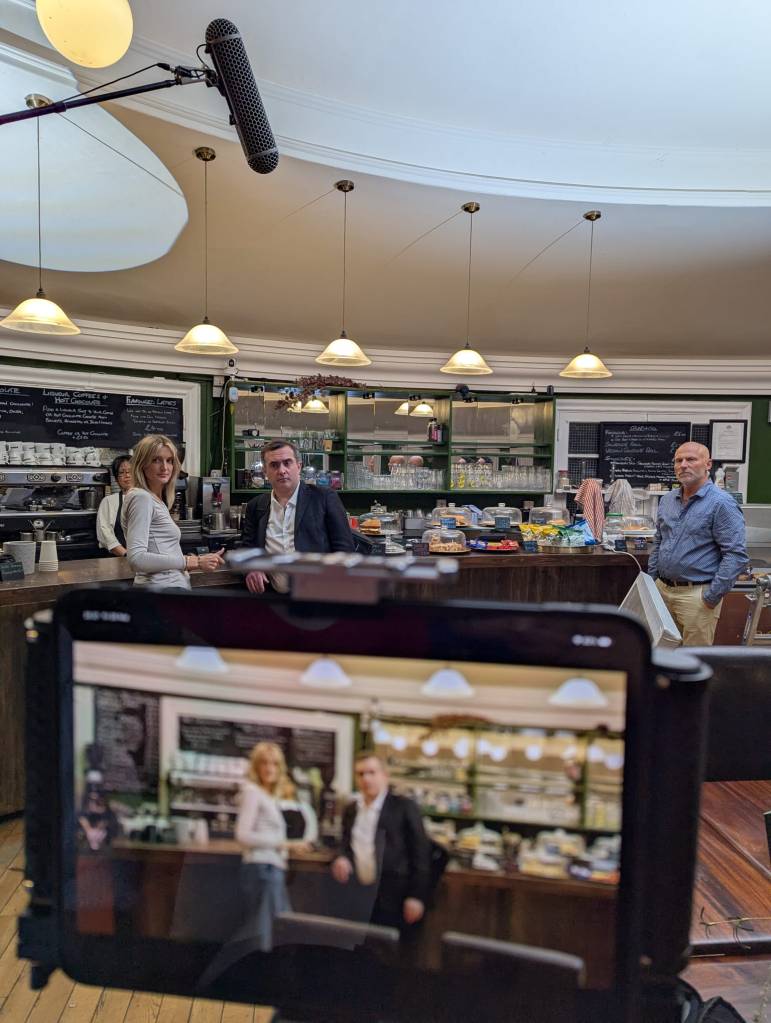
I was feeling a bit knackered last week after the previous week’s three-day shoot, which started on 26 September. I spent most of last Monday paying the pile of invoices that had built up. I’d damaged an illuminated sign during the cafe shoot on Friday, so that also needed sorting.

The week before, Julie had interviewed Keaton and Lamb, so I edited a short version of this based on the film’s theme last week. I think it’s worked quite well.

We’ve realised that the scenes need breaking up a bit, so I spent a day walking around Brighton gathering various B-roll shots. I also worked on posters and a press release. Tom focused on the design for the visuals, whilst Julie polished the text. Hopefully, we’ll send something out this week, then we can get the film onto IMDb.

I’ve also spent some time going through all my notes – which may be of interest. In the past I’ve managed all my projects using spreadsheets, with separate worksheets for different aspects. When I started working on Automatic months (years?) ago, I had worksheets for actors, finance and locations. Over time I spun some of these off into separate sheets and placed them in folders dedicated to their topic – one for actors’ info, one for props etc, but I’ve developed a new paper-based system that seems to be an improvement.

I group scenes into “shoot days” based on location – so all the cafe scenes get one sheet, all the boardroom scenes get another and so on. I keep an A4 pad on my desk and tear off pages to create one sheet per shoot day or subject, such as Cafe, Media or Promotion. I note props, clothing, transport requirements and anything else relevant to that day or subject on these sheets.

I also keep a separate A4 sheet of “To Do” items. Recently I needed a bit more focus, so I added a “Today” page where I write down things that must get done today. Admittedly, I don’t always quite manage it and end up reusing yesterday’s “Today” sheet, but it generally helps me stay on track. I progress by crossing things off and periodically creating new “To Do” sheets or new shoot day sheets, as needed.

This system seems to be working fairly well. At the moment my “To Do” sheet includes:

  • Setup more social media
  • Film the final truck scene
  • Music
  • Create final video presentation with voice-over
  • Press release
  • Interviews
  • Schedule remaining scenes
  • Film transition scenes & B-roll
  • Media release forms

And on my “Today” sheet:

  • Write a blog post
  • Press release
  • Schedule
  • Talk to Angela
  • Pay invoices

Actually, that’s a lie, I’m writing this update in a hurry and haven’t created today’s sheet yet!

Set Dressing, Blocking and a New Toy

This filmmaking lark is becoming a blur. What did we get done last week? Right – Wednesday! Angela and I visited the House to mull over blocking and how best to dress the rooms. By “dress”, I mean “try to make it look like real people live there and not like a film crew’s invaded”.

We also met our 16-year-old Esther and ran through the short flashback scene with her. She’s brilliant and has a great grasp of the script, which is very reassuring.

Two rounds of online rehearsals took place this week, which I have to say went incredibly well. It’s almost surreal watching the script that I’ve laboured over for more than a year starting to come to life.

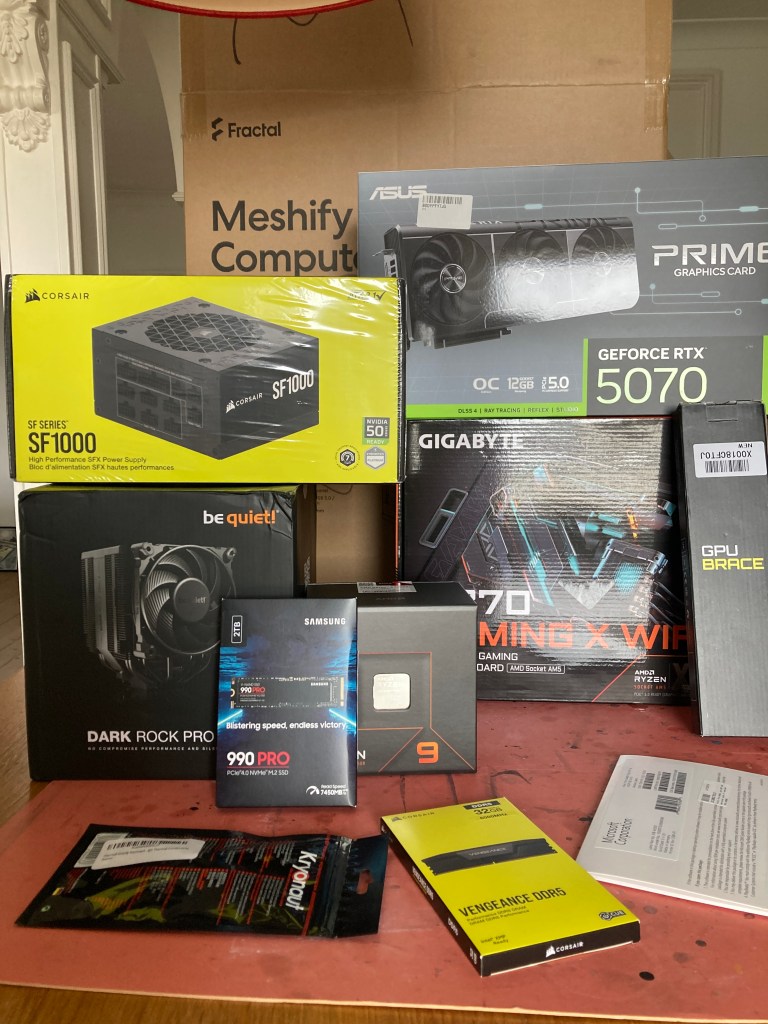
On the tech front, there’s the editing set-up saga. When I first got into this, I was editing on an Alienware R3 laptop using Adobe Premier. Then I picked up a Blackmagic camera, ditched Premier and moved to the excellent Davinci Resolve. Although that worked well, my Alienware struggles to handle anything fancy, and Microsoft has now declared that my machine is officially obsolete. The battery’s been dead for years, and since it couldn’t cope with the newer version of Resolve, I’ve bitten the bullet and started building a new PC. With expert guidance from Bill, I’ve ordered numerous parts, and boxes are arriving. I can’t wait to get it all set up and hopefully running Resolve like a dream, compared to the old brick I was using before.

I’ve also solved the logistics puzzle of shooting scenes with Zoom or Teams calls in them. It turns out the solution was quite simple: actors working from home, like everyone else! I did a quick shoot on Saturday to get some “prop” shots that we’ll use in the real shoots. I’m nearly ready to schedule the Zoom scenes properly now.

Oh – and I’ve successfully faked a Zoom call using the new Google Veo AI Flow or FlowState or whatever it’s bloody called, which is clever. I’ve also co-designed and ordered a couple of fake posters with the help of my arty friend, TomCatTatt.

Only one week now until our first shoot!

Locations / Relationships

Filmmaking is a strange occupation. When I was writing the script, some weeks I’d write only a few paragraphs, yet I felt like I’d made real progress. Other times, I’d write pages and feel stuck. Now I’m in pre-production and it’s much the same. Last week I felt busy, but did I actually move forward? It’s hard to say.

I’ve been meeting with actors to talk through their characters and how they connect with each other. Some meetings are one-to-one, others are in small groups, especially when the relationships matter to the story. For example, the IT Director and Finance Manager have worked together for a while so have a longstanding friendship. But the new CEO? No one’s quite sure where he fits in yet. He’s a dark horse, so that’s still a bit of a mystery.

I’ve also been out and about location hunting. While wandering around Moulsecoomb, I found a great public space that screams plain, structured conformity, which may be perfect for the tone I want to set. I’ll go back at night to see how it feels in the dark. I also tracked down some good office spaces, a fantastic corporate café, and what seemed like an almost perfect flat. But the cafe isn’t available until later in the year, and the flat, great in some ways, has a huge window looking over a beautiful harbour with expensive sailing boats. Not exactly soul-crushing monotony. GREEN SCREEN? Yes, yes, yes! I’m exploring this as a solution.

I have also engaged someone to help with social media. Julie Russell has a background in clinical microbiology and now runs a tattoo studio in Muswell Hill, so is ideally placed to shape my scattered thoughts into something presentable to the general public. (NOTE: she’s barely started yet!!)

So, writing all this out, I actually feel a bit better. It seems I did get more done last week than I thought.

This week’s to-do list: Agree the flat, confirm the truck, secure the café, and find a petrol station.

That agenda should keep me busy for the week.