How do you make a film? How do you storyboard it? How on earth do you edit it? Maybe I should’ve asked these questions a couple of years ago? If I were asked them now, I’d have loads of sage advice to share. I would sit there in front of lots of keen young filmmakers, lecturing them as if I knew what the fuck I was talking about. Truth is, when I started this project, I wasn’t so sure. But last week felt like nothing more than “worrying away at it”. That said, every time I go through this process, I stumble across another stage of filmmaking that professionals would no doubt recognise instantly, but never bother to mention. There’s a whole shadow curriculum to this business. I’m half-tempted to write a book about it when I’m done.
In the meantime, last week was spent shuffling bits about – tightening cuts, trimming excess and nudging sequences into place. The main thrust has been improving the narrative structure. It all felt a bit haphazard to begin with, but somehow, perhaps subconsciously, I’ve managed to trim the fat, sort the sequencing and generally polish it up. I’m calling that progress.
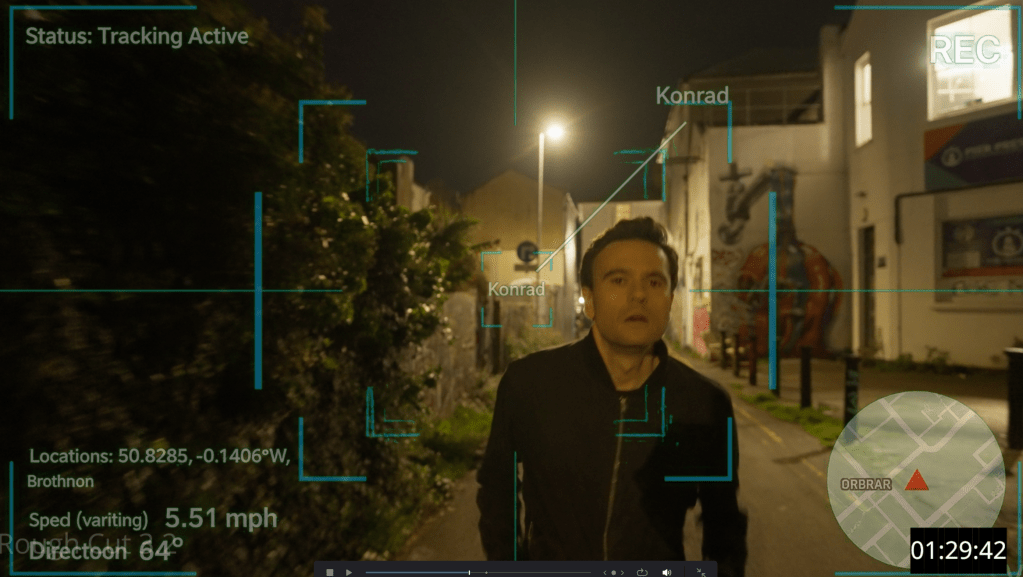
There’s a well-worn criticism of IT technicians who move into management that they’re too ready to retreat into what they’re comfortable with and avoid what they’re not. So, instead of managing people, they end up endlessly tweaking spreadsheets. I’m clearly guilty of that and towards the end of last week, I disappeared down a rabbit hole with Davinci Resolve’s “Fusion” tool – an image manipulation feature that is both extraordinarily powerful and maddeningly obscure, with zillions of controls.
AI came to the rescue unexpectedly – albeit in a slightly unreliable way. I’ve been leaning on Google Gemini for guidance with Fusion, but because there are multiple versions of Resolve, it often gets things completely wrong. Ah, but the big advantage of AI over books is that you can argue with it. You can challenge it, point out its mistakes and get it to justify itself. You can even do that in the sort of language you might use with a particularly stupid assistant. In fact, the whole exchange has ended up rather neatly reflecting the theme of the film itself: “You absolute wanker! I told you – there is no ‘Invert’ button on that page! I’ve asked you three times and every time you give me something different! I’ll ask one more time: Where is the fucking Invert button?” The beauty of machines, of course, is that they don’t take offence. They just sit there, keeping their cool, while I lose my rag – and eventually, through sheer persistence, I figure out how the software actually works.
Meanwhile, our music producer, Carrie Higgs, is still somewhat in limbo as I haven’t yet delivered picture-locked media. That hasn’t stopped her progressing though, and she’s already sent through draft compositions, which I’ve dropped into the edit to get a feel for tone and atmosphere. We also agreed on the closing sequence music, and it’s all sounding very promising. We’re looking to bring in a group of local singers, so if you’re a choral singer anywhere near Brighton and happen to be reading this, then please get in touch.
So, we have narrative improvements, a few effects, some music and the odd pickup shot. It’s coming together and I’m nearly ready for another test screening. I’d had my sights set on the Brighton Rocks Film Festival but entries closed in April. I feel it’s better to get the film right than rush it … and I really think it’s getting there.
 Nigel Chaloner